Kluge Serial Numbers
The Original Hacker's Dictionary [This file, jargon.txt, was maintained on MIT-AI for many years, before being published by Guy Steele and others as the Hacker's.
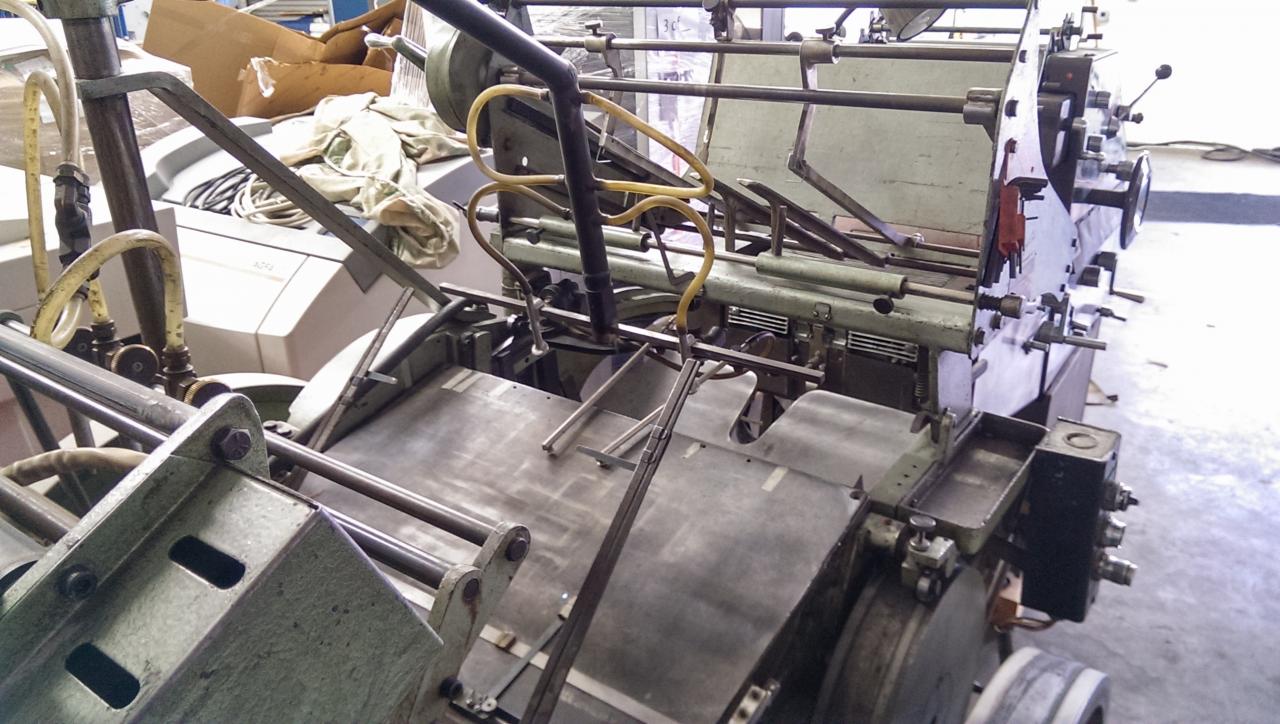
Key people and, Founders Chandler & Price was founded in 1881 in, by and William H. They manufactured machinery for printers including a series of hand-fed platen, as well as an automatic feeder for these presses (the Rice Feeder), paper cutters, book presses, and assorted equipment. Despite dominating the industry in the 1930s, by the 1950s the industry had eclipsed the world of movable type printing, and only Chandler & Price and continued to make open platen () presses. Chandler & Price ceased production of presses in 1964. The New Style made by Chandler & Price was such a popular press that The Practice Of Printing: Letterpress and Offset by, the standard textbook for thousands of high school printing programs in the middle of the 20th century, used the press as its example when teaching students the basics of press operation.

Results The majority of patients are 15 to 44 years of age (49.9% male), and we estimate that the case fatality rate is 70.8% (95% confidence interval [CI], 69 to 73) among persons with known clinical outcome of infection. The course of infection, including signs and symptoms, incubation period (11.4 days), and serial interval (15.3 days), is similar to that reported in previous outbreaks of EVD. On the basis of the initial periods of exponential growth, the estimated basic reproduction numbers ( R 0) are 1.71 (95% CI, 1.44 to 2.01) for Guinea, 1.83 (95% CI, 1.72 to 1.94) for Liberia, and 2.02 (95% CI, 1.79 to 2.26) for Sierra Leone. The estimated current reproduction numbers ( R) are 1.81 (95% CI, 1.60 to 2.03) for Guinea, 1.51 (95% CI, 1.41 to 1.60) for Liberia, and 1.38 (95% CI, 1.27 to 1.51) for Sierra Leone; the corresponding doubling times are 15.7 days (95% CI, 12.9 to 20.3) for Guinea, 23.6 days (95% CI, 20.2 to 28. Neumann U87 Serial Number Date. 2) for Liberia, and 30.2 days (95% CI, 23.6 to 42. Emagic Driver Xp. 3) for Sierra Leone. Assuming no change in the control measures for this epidemic, by November 2, 2014, the cumulative reported numbers of confirmed and probable cases are predicted to be 5740 in Guinea, 9890 in Liberia, and 5000 in Sierra Leone, exceeding 20,000 in total. As of September 14, 2014, a total of 4507 confirmed and probable cases of Ebola virus disease (EVD), as well as 2296 deaths from the virus, had been reported from five countries in West Africa — Guinea, Liberia, Nigeria, Senegal, and Sierra Leone.
In terms of reported morbidity and mortality, the current epidemic of EVD is far larger than all previous epidemics combined. The true numbers of cases and deaths are certainly higher. There are numerous reports of symptomatic persons evading diagnosis and treatment, of laboratory diagnoses that have not been included in national databases, and of persons with suspected EVD who were buried without a diagnosis having been made. Dave Dub Treatment Rarity more. The epidemic began in Guinea during December 2013, and the World Health Organization (WHO) was officially notified of the rapidly evolving EVD outbreak on March 23, 2014.
On August 8, the WHO declared the epidemic to be a “public health emergency of international concern.” By mid-September, 9 months after the first case occurred, the numbers of reported cases and deaths were still growing from week to week despite multinational and multisectoral efforts to control the spread of infection. The epidemic has now become so large that the three most-affected countries — Guinea, Liberia, and Sierra Leone — face enormous challenges in implementing control measures at the scale required to stop transmission and to provide clinical care for all persons with EVD.
Because Ebola virus is spread mainly through contact with the body fluids of symptomatic patients, transmission can be stopped by a combination of early diagnosis, contact tracing, patient isolation and care, infection control, and safe burial. Before the current epidemic in West Africa, outbreaks of EVD in central Africa had been limited in size and geographic spread, typically affecting one to a few hundred persons, mostly in remote forested areas. The largest previous outbreak occurred in the districts of Gulu, Masindi, and Mbarara in Uganda. This outbreak, which generated 425 cases over the course of 3 months from October 2000 to January 2001, was controlled by rigorous application of interventions to minimize further transmission — delivered through the local health care system, with support from international partners. We now report on the clinical and epidemiologic characteristics of the epidemic in Guinea, Liberia, Nigeria, and Sierra Leone during the first 9 months of the epidemic (as of September, 14, Senegal had reported only a single case). We document trends in the epidemic thus far and project expected case numbers for the coming weeks if control measures are not enhanced. Surveillance Full details of the methods, along with sensitivity and uncertainty analyses, are provided in, available with the full text of this article at NEJM.org; a summary is provided here.